|
The
Woodland Education Centre |
|
|
The
Woodland Education Centre |
|
Ecological Surveys 1996 - 1998
Heath Species on the Project Site.
| The survey results indicated that the vegetation on the Offwell project
site was making slow but steady progress towards becoming a dry
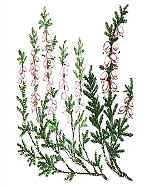
heath community. Heather (Calluna vulgaris) was present in many areas of
the site and was gradually spreading. (Its % frequency had increased from 6 - 12% over the
three year period). The mean % cover for Heather over the whole site was 1% in 1996. This had increased to 4.7% by 1998, with Heather now the eighth most dominant plant overall on the heathland in terms of percentage cover. In some areas of the site (section 9), Heather was the dominant plant by 1998.
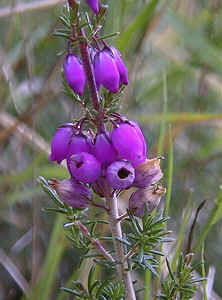
Re-seeding with heather cuttings/seed from other heathland areas has not been necessary on the project site. Heather and Bell Heather are regenerating naturally. They are either regenerating from seed banks still viable in the soil, or from seed dispersing onto the project site from adjacent areas in the Woodland Education Centre. These species are found growing freely in several areas of the Centre, indicating that conditions are generally favourable for heathland vegetation over much of the region. It is likely that in the past much, if not all of the area, was covered in heathland. This makes the task of regenerating heathland much simpler because the necessary conditions are already present. Cross-leaved heath (Erica tetralix) has not so far been found on the project site. This species is characteristic of wetter heathlands.
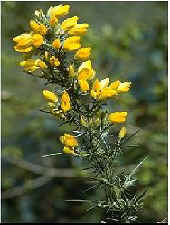
Common Gorse is normally confined to the margins, boundary banks and areas of disturbed soil on well-established heathlands. It seldom occurs on open heath where it is replaced by either Dwarf Gorse (Ulex minor) or Western Gorse (Ulex gallii). Western Gorse, as its name suggests, occurs mainly in the west of England. Dwarf Gorse is the eastern species. The ranges of these two species overlap to the east of Devon, in Dorset. Western Gorse occurs in other areas of the Woodland Education Centre, but was not found on the project site until 1998. It was then represented by two small plants. |
Continue to more
heath species 
Ecological Surveys 96 - 98 |