|
The Woodland Education Centre |
|
|
The Woodland Education Centre |
|
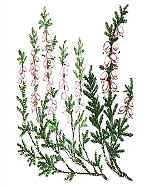
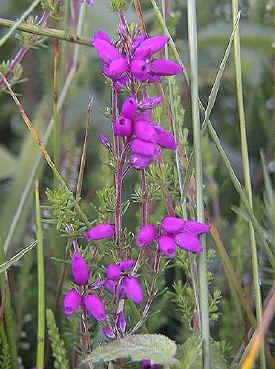
Several different measures can be used to assess species abundance, depending both on the type of community being surveyed and on the level of data collected during the survey. Percentage frequency and percentage cover are both measures of abundance. Percentage frequency is a measure of how often a species occurs in samples. For example, if a species is found in every quadrat sampled, then it has a % frequency of 100%. If it is found in 10 out of a hundred samples, then it would have a % frequency of 10%. Percentage frequency therefore tells us how common a species is, but it does not give information on how much of the species is present once we have recorded it. Percentage cover is an additional measure of abundance which tells us how much space a species occupies in a sample, once its presence has been noted. These two measures are obviously related (the more space a species occupies, the more likely it is to be found in more than one sample), but using the two together can give information on how species are distributed in a habitat. For example, if a species was found to have a low % frequency, but a relatively high mean % cover, it would indicate that the species was occurring (rarely) but in large clumps where it did occur. This would suggest that the species had a very clustered distribution. Equally, a species might have a very high % frequency, showing that it was widespread over the habitat, combined with a low mean % cover, which would tell us that while it was common, it was not very dominant in the habitat in terms of % cover. Using these measures of abundance, we can conclude that most of the species found on the project site in 1998 were not common. Seventy one of the 79 species recorded in 1998 had a percentage frequency of less than 25% (i.e. were found in less than a quarter of all quadrats sampled). Only 8 species had a mean % cover of more than 5% over the whole site, and most had a mean % cover of substantially less than 5%. The results indicated that the vegetation on the Offwell project site is making slow but steady progress towards becoming a dry heath community. Heather and Bell Heather were both present and were gradually spreading on the site |
Continue to Heather distribution on the project site
Ecological Surveys 96 - 98 |