|
The Woodland Education Centre |
|
|
The Woodland Education Centre |
|
Introduction to the Ecological Surveys
An
ecological survey provides a snapshot outline view of what a particular area was like at
the time of surveying. The purpose of the ecological surveys presented here is two-fold:
These changes will have been brought about as a direct result of the management regimes being used on the project site, as well as by the environmental conditions which have been prevalent over the preceding year(s).
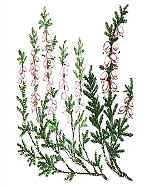
In the other sections which are brushcut at certain times of year, natural succession to woodland was effectively halted as soon as the cutting regimes were initiated in1995/96. What then remained was the unending competition (battle for space and resources) between the colonizing plants which were able to withstand the brushcutting regimes. The balance of 'power' (dominance) between individual plants in each of the sections is constantly changing, depending on both the external management and fluctuating environmental conditions. For example, a lengthy, summer drought will have a much more negative impact on grasses than on heathers, which are adapted to withstand such conditions. Such a drought would give heathers the opportunity to increase their dominance on the site at the expense of the grasses. Factors such as weather, microclimate, nutrient status and physical condition of the soil, insects and other animals selectively feeding on the plants, may influence the whole project site equally, or only some parts of it.
The different management regimes applied to each section apart from the control section, are a constant factor. The same management is applied to all of the vegetation within each section, each year. One can therefore say with confidence that a very great proportion of the observed differences between sections is a direct result of the type of management applied.
Grasshoppers abound in the more grassy sections and different butterflies selectively visit different sections in search of particular flowers and caterpillar food plants for egg laying. Although the ecological surveys were only documenting vegetation on the project site, some data has been gathered on the fauna of the project site and this will be published at a later date To summarize, the different management methods used on the project site are having a profound impact on the composition of the vegetation in the differently managed sections. These differences are now clearly visible at a glance. The ecological surveys document these increasing differences in detail and show how the site has changed since the initiation of the experiment. Data acquired over a long time span will allow the more directional changes in vegetation resulting from the effects of the constant management, to be picked out from any fluctuations caused by variations in environmental conditions.
|
Continue to >> Site Description
Ecological Survey 2001 |