|
Branched Bur-reed can be found in both the swamp and marsh areas of wetlands. However, it prefers the swamp areas, where the water depth is deeper. In the picture on the left, the spiky seed heads, which give the plant its name, are visible. They can grow to be as tall as 1.5 metres. As with Yellow Iris, the larvae of insects such as dragonflies and damselflies will climb from the water and up the plant stems when they are ready to emerge as adults. |
| . | |
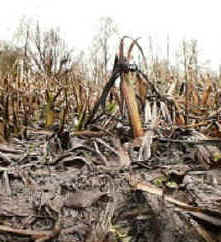 |
The upper parts of the plants die down in winter, as do those of Yellow Iris. A tangled mass of old dead stems and leaf bases remain at the bottom. These form a very effective trap for mud and soil carried into the wetlands by rain and incoming water. This trapping will eventually result in the wetland drying out, because the level of the land becomes raised above that of the water. The wetland plants are 'land makers'. |
