Roe Deer
Information on Roe Deer from The
Mammal Society here
Capreolus capreolus
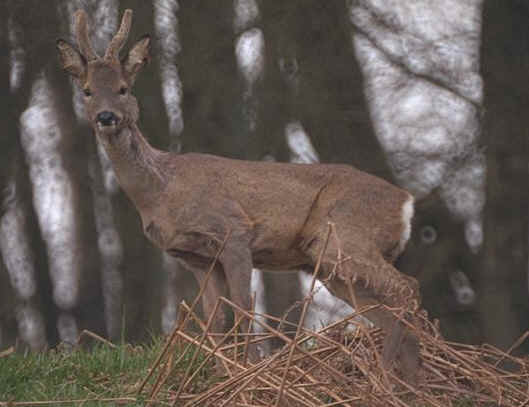
Roe deer can be seen throughout much of England but are less widely distributed in parts of the Midlands. Contrary to popular belief, this small deer is not a herd animal and one male will normally associate with one female. They are territorial during late spring and summer. During the breeding season (known as the rut) from mid-July through August the males (bucks) are particularly defensive of their territory, however some females (does) have looser territories that overlap more than one male's territory. Although mating occurs in late summer, the fertilized eggs do not start to develop immediately. This phenomenon, known as delayed implantation is unique amongst hoofed animals. Females typically produce two young during May of the following year. The young will stay with their mother for about 12 months. After this time, their father again becomes territorial and will drive out any young bucks from his territory. Roe deer appear greyish during winter, but change their coats to become reddish brown during the summer. The males grow antlers which are used as weapons in territorial disputes during the rut. Occasionally one or both of the males will die as a result of these fights. The antlers are also used to brash or scrape the bark from young trees. Along with their habit of eating the leading shoots, deer brashing can be a significant problem in new or young tree plantations. The roe buck in the picture above is in his grey winter coat and his growing antlers are covered in a hairy skin known as velvet. As the deer become territorial during April and May the velvet will die and fall off exposing the bare antlers, ready for the male to fight his territorial disputes. |
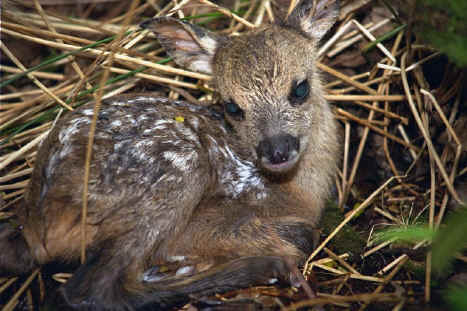 |
Left: A young Roe Deer fawn |
| more from BDS |