Discover |
|
Devon Biodiversity Action Plan
Discover |
|
Dormouse
Muscardinus
avellenarius
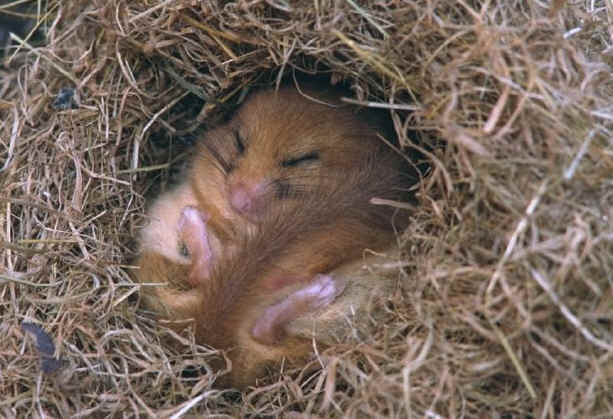
Dormice
have a National Biodiversity Action Plan (BAP) devoted to them, |
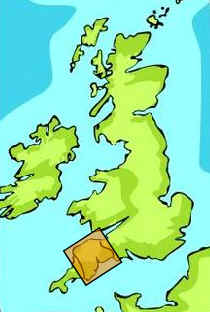
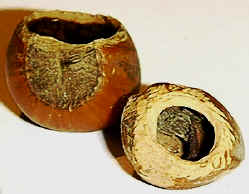
The Dormouse is one of Britain's most endangered mammals. This is because much of its habitat of deciduous woodland and hedgerows has been lost. Competition by Grey Squirrels for food may also be a contributing factor. This small attractive woodland rodent is mainly nocturnal. It is arboreal, spending its active time in shrubs and trees where it searches for food. Its diet consists mainly of fruit, berries, flowers and insects. In the autumn, hazelnuts can be a very important source of food, as the Dormice have to build up their fat reserves to allow them to hibernate overwinter. In fact, the Dormouse can hibernate for as much as three quarters of a year if the weather is bad. They hibernate on the ground, rolled tightly into a ball in a nest of leaves and grass. Their body temperature and heart rate are lowered and they become torpid and cold to the touch. Hibernating enables them to survive by "shutting down" during cold weather and they can even do this in spring or summer. Thus they have long periods of inactivity which probably contributes to the long life span of 5 years. Dormice breed once or twice a year usually producing 4 young which are independent in about 2 months. Their nest are often built of grass interwoven with honeysuckle. The nests can be anywhere from a few feet above the ground in brambles to high up in the forest canopy. Their colour is light brown with furry long tail and prominent beady eyes. Dormice are found mainly in the south of England particularly in Devon and Somerset. Other favoured areas include Kent and Sussex with sporadic populations elsewhere. They are largely absent in the north of England. Devon is fortunate in having good populations of Dormice, so it is very important to maintain these. The Dormouse therefore has its own individual Species Action Plan within the overall Devon Biodiversity Action Plan (BAP). (More on Devon BAP here) Dormice are protected by law and you may not even handle one without a licence which is available from English Nature. Dormice like to eat hazelnuts and if you examine a hazelnut shell it is possible to tell for certain whether it has been eaten by a dormouse.
Why not go and take a look along your local hedgerows and wooded copses to see if you can find signs of Dormice in your area. You will obviously need to look in areas where there are mature Hazel trees, producing nuts in the Autumn. You can find out what a Hazel tree looks like here. Continue to or back to
|
Copyright © Offwell Woodland & Wildlife Trust 1998/9 & 2000/1/2/3/4/5 http://www.offwell.info
All the information including images, charts, movies and sounds is provided copyright free, only for educational use by: schools, colleges and universities unless you are making a charge. If you wish to use information or any part of this site for commercial purposes or for any purpose where a charge is made then you must get permission, so make sure you contact us first. Remember, if you are not a school, college or university you must obtain permission to use any part of this website. Note that company logos are reproduced with permission and remain copyright of their respective owners.