 |
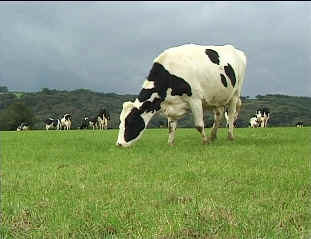
The farmer will not just make silage from grass. Throughout the growing season livestock such as beef cattle and especially dairy cows, will graze the fields. For high yielding dairy cows (left) the optimum grazing height of the sward is about 20 cm. The grass at this stage is at its most succulent and nutritious. The farmer therefore has to manage access to the grass to ensure there is always a constant supply of just the right amount of grass. |
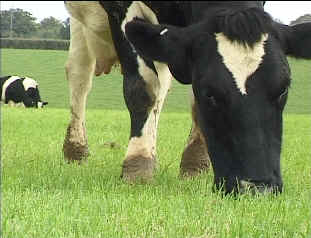 |
Once the cows have eaten all the grass in one field, they will be moved to other fields. They will return when the grass has re-grown. The farmer has to ensure that the cattle do not overgraze the fields. Grazing the sward to below 5cm damages the growing plants and reduces the yield. Conversely if the grass is left too long, it becomes old and less palatable. Less milk will be produced during this time as a consequence. To avoid this situation the farmer will lightly trim or 'top' the field. |
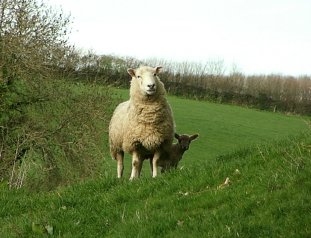 |
Many farmers of intensive grasslands will only graze sheep during the winter months. Those sheep which are kept for breeding will graze on less favoured areas for the rest of the year. This may be on land belonging to the farmer or more often, on farms in the uplands of Britain. The lambs from these areas are typically fattened on the more productive lowland farms before they are sold for meat. |
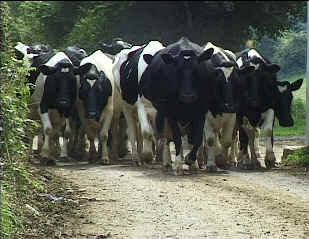 |
Intensive grasslands are often grazed by sheep in the winter because the land is usually too wet for larger livestock. If herds of heavy cattle are left out, they would damage the valuable grassland by churning it up with their feet. There is also not enough grass growth to sustain cattle during the winter. Cattle are therefore housed indoors in the winter where they are fed on silage and other food supplements. |