Offwell Woodland & Wildlife Trust

Promoting the British Countryside

Home

About us Conservation Education Wildlife Habitats Maps Search Resources Sponsors


Fertiliser
(2)

kimera.JPG (28508 bytes)

Timing is only one factor in the decision to use fertiliser. The farmer also has to decide upon the chemical make-up of the fertiliser. This will depend on local knowledge, as well as on soil analysis. The correct balance of Nitrogen (N) Phosphate (P) and Potash (K) is just as important for growing grass as it is for other crops. The fertiliser is sold in a variety of ratios of N, P and K. Slurry and dung contain phosphate and potash. An allowance will be made if this has already been applied. Fields which are used for silage require more potash than those used only for grazing.

fert 2.jpg (106167 bytes)

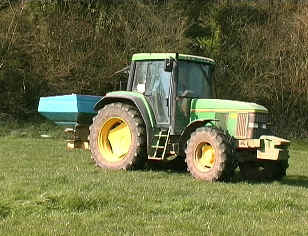
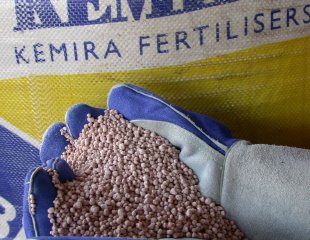
The fertiliser is bought as a liquid or more usually in granular form. The granules are typically 2-3 mm in diameter (above left). They are spread from a machine which is usually attached to the back of a tractor (movie). The amount of fertiliser which is applied is controlled by the forward speed of the tractor, together with the settings on the machine. Fertiliser is a significant cost to the farmer but without it, grass production would fall dramatically.

Continue


CONTENTS


Copyright © Offwell Woodland & Wildlife Trust 1998/9 & 2000/1/2/3/4/5 http://www.offwell.info

All the information including images, charts, movies and sounds is provided copyright free, only for educational use by schools, colleges and universities unless you are making a charge. If you wish to use information or any part of this site for commercial purposes or for any purpose where a charge is made then you must get permission, so make sure you contact us first. Remember, if you are not a school, college or university you must obtain permission to use any part of this website. Note that company logos are reproduced with permission and remain copyright of their respective owners.