 |
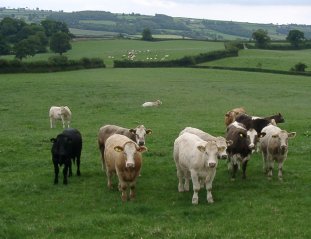
Modern British intensive agricultural grasslands are
specialised and highly productive areas. They have lower biodiversity and biomass in
wildlife terms, than non-intensive grasslands. Nevertheless, they are essential for the
production of food for the large population of Britain. Today, Britain produces enough
food to feed 36 million of its citizens. By contrast, in 1930, Britain only produced
enough food for 16 million people 1*. This increase in production has gone hand in hand with massive
price reduction. Today, food only accounts for about 10% of the weekly budget in Britain.
Fifty years ago it was 30% 2*. |
 |
This advance in food production has not been without its
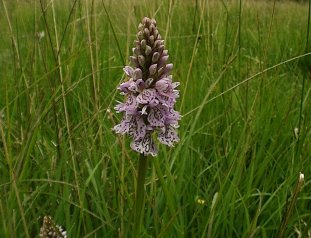
impact. Ninety eight percent of wildflower meadows have disappeared and with them a large
number of plant and animal species have become locally or even nationally extinct. The
Royal Society for the Protection of Birds states that 25% of bird species are declining in
Britain 3*. The Corncrake, a bird of grasslands, is no longer found in England. The
amount of biomass that non-intensive fields support, can be vast. For example an acre
(.4Ha) of old hay meadow can support about 2.25 million spiders. Each spider would consume
2 insects a week for 6 months 4* . |
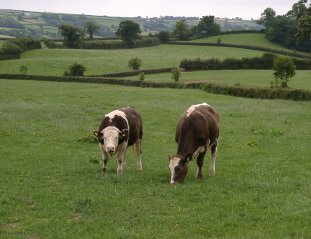 |
Intensive agricultural grasslands are not without
biodiversity. However, their wildlife value is very much reduced because of two factors.
Firstly, relatively few different plant species grow in the field. This means that wild
herbivores are more or less limited to those which like eating the intensive grass
species. Secondly, farming operations such as silaging or intensive and repeated grazing,
remove the growing crop from the field in a very short time. Few species can survive this
rapid change or alternatively complete their lifecycle within the available period. Ground
nesting birds and certain butterfly species are particularly vulnerable. |
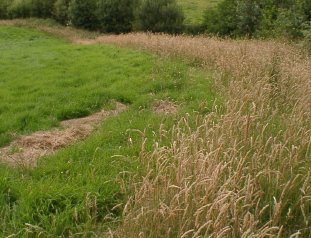 |
The provision of conservation headlands is a significant
contribution towards adding biodiversity and biomass to intensive grass fields. Such
headlands need to be cut or grazed in late summer to prevent the establishment of weeds
and poisonous plants such as Ragwort. However, by this time a great many species will have
benefited from these temporary habitats. The loss of production is minimal when compared
to the wildlife benefit. |
|
Continued |