 |
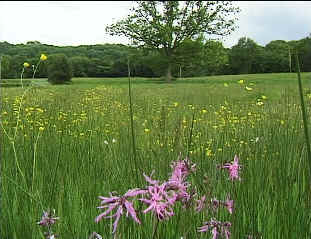
Thus old wildflower meadows provided habitats for numerous
plant and animal species. Today, 98% of wildflower meadows have been lost because of
urbanisation, road building, forestry and agricultural intensification. As a result, some
of the plants which grew in these wildflower meadows are now endangered or even extinct in
Britain. However, such fields produce low yields of hay and the number of livestock which
can graze these fields is far less than the efficient intensive grassland would
support. In today's economic climate, these wildflower meadows are uneconomic. |
 |
In the past the winter feed for ruminants was usually hay.
Today little hay is grown on intensive grasslands. Hay is dried grass and is cut far later
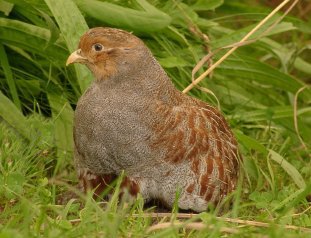
in the season than grass cut for silage. Thus species such as Grey Partridge (left) and
pheasants which nest in grass, had time to hatch their young. The slow machinery of
yester-year allowed more time for animals to escape the cutting mechanism. The later
cutting of hay fields also meant there were far more invertebrates for the chicks to feed
on. Hay fields therefore, have higher biodiversity than silage grasslands. |
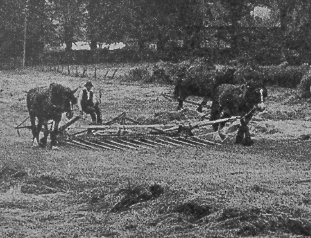 |
Before tractors became commonplace, which occurred after
World War 2, agricultural machinery would have been horse powered. Even so, tasks such as
hay making required an enormous amount of physical labour. Farms at this time, typically
had small fields and a range of crops which also benefited biodiversity. |
|
Continue |